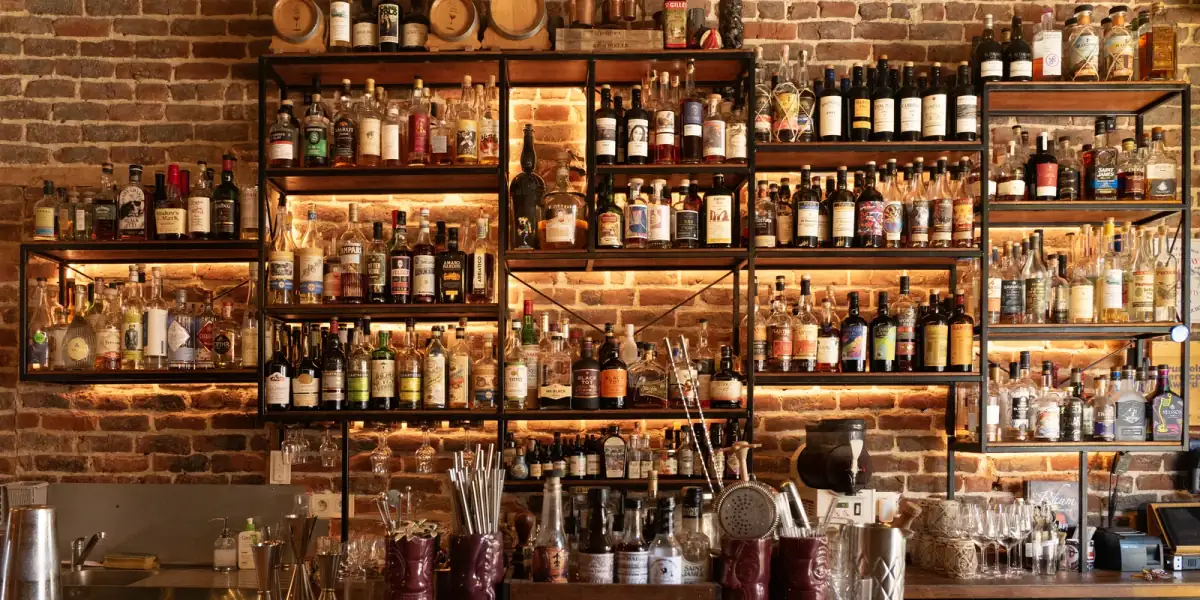
Walk into most bars that call themselves “rum bars” and you’ll find a wall of familiar labels — the ones with the biggest marketing budgets. Ours looks different, and that’s deliberate. Today the backbar holds more than 175 rums, drawn from nearly twenty origins and over fifty distilleries. But the number isn’t the point. The point is that every bottle earned its place.
Here is how we chose them — and what’s worth reaching for when you visit.
How we choose: relevance over marketing
There’s only one rule behind the shelf: we buy what we love, and what is relevant — never a bottle that’s there just for the name on it.
That sounds simple, but it’s the hardest discipline in this trade. A rum bar can fill a wall in an afternoon by ordering the obvious brands. Building a selection that actually says something takes years of tasting, following independent bottlers, and passing on the safe choice when the interesting one is sitting right next to it. We’d rather carry a single cask nobody’s heard of that makes you stop and ask “what is this?” than ten polished bottles that all taste like a marketing brief.
The result is a backbar with a point of view. It leans hard on independent bottlers, on distilleries with a real sense of place, and on styles most bars in Belgium simply don’t stock.
The same instinct shapes what happens in the glass. Our job is to find extraordinary spirits — and then get out of their way. We reach for technique when it makes a drink better, never to put on a show. A great daiquiri hides nothing behind it; neither should we. When a rum is this good, the smartest thing a bar can do is let you taste it.
A tour of the shelf, tradition by tradition
Rum divides, roughly, into three traditions inherited from the Caribbean — and we go deep in all three. (New to this? Start with our rum guide.)
- The English tradition — rich, full-bodied, pot-still rums. This is Jamaica at its most expressive: high-ester, “funky,” unmistakable. On our shelves that means Hampden, Worthy Park, Monymusk, Appleton Estate. Alongside it, the balance and polish of Barbados — the Foursquare Exceptional Cask Selection runs deep here — and the dark, oily Demerara rums of Guyana.
- The French tradition — rhum agricole, distilled from fresh cane juice: vegetal, precise, alive. Martinique and Guadeloupe form the backbone (Neisson, Montebello and more), and Haiti extends it into raw, terroir-driven clairin.
- The Spanish tradition — lighter, column-distilled ron, gently aged.
None is “better” than another. They’re three different languages, and the whole pleasure of a deep backbar is switching between them in an evening.
The one style most bars in Belgium miss: the Indian Ocean
Here’s what surprises people who really look at our shelf. Our second-largest origin isn’t in the Caribbean at all — it’s La Réunion, the French island in the Indian Ocean, with close to thirty references. Our single most-represented distillery is Savanna, ahead of every Jamaican name.
Réunion rum is its own world: grand arôme, high-ester bottlings with a profile you won’t find anywhere in the Caribbean. Very few bars in Belgium carry it in any depth. We carry it because it’s some of the most exciting rum being made today — which is the whole philosophy in one shelf.
Two bottles that explain everything
If you want to understand the backbar in two pours, ask about these.
Velier Diamond 1981. We bought it at auction — the two of us, sharing a pizza, before the bar had even opened. It’s a monument of the “geek rum” world: one of the legendary Velier bottlings from the era that pulled us all the way into this obsession, the same run that gave us the mythical Caroni, Enmore and Albion. It’s also among the oldest fully tropically-aged rums you’ll meet — and if you’ve read our rum guide, you know how much faster rum matures under a tropical sun. This bottle isn’t on the shelf because it’s expensive. It’s there because it’s the reason we do this.

Savanna “Herrline.” A grand arôme bottling from Réunion, released in collaboration with Swell The Spirit, an independent bottler — exactly the kind of small, passionate outfit we chase. It’s a gem, and like the Diamond, it’s not for sale: you can only meet it at the bar.
Beyond rum
Rum is the heart of the room, but not all of it. The same instinct — depth, independence, no filler — shapes a tight selection of agave, whisky and a handful of things we simply couldn’t resist. If your night starts with rum, it doesn’t have to end there.
How to explore it
- At the bar. The fastest way in is to tell us what you like and let us pour. There’s no wrong question, and the whole menu is built around showing off one style at a time.
- In a cocktail. A great rum isn’t only for sipping neat. The simplest classics — a Ti’ Punch, a Daiquiri — are the truest test of a good bottle, and we build ours to showcase a specific rum.
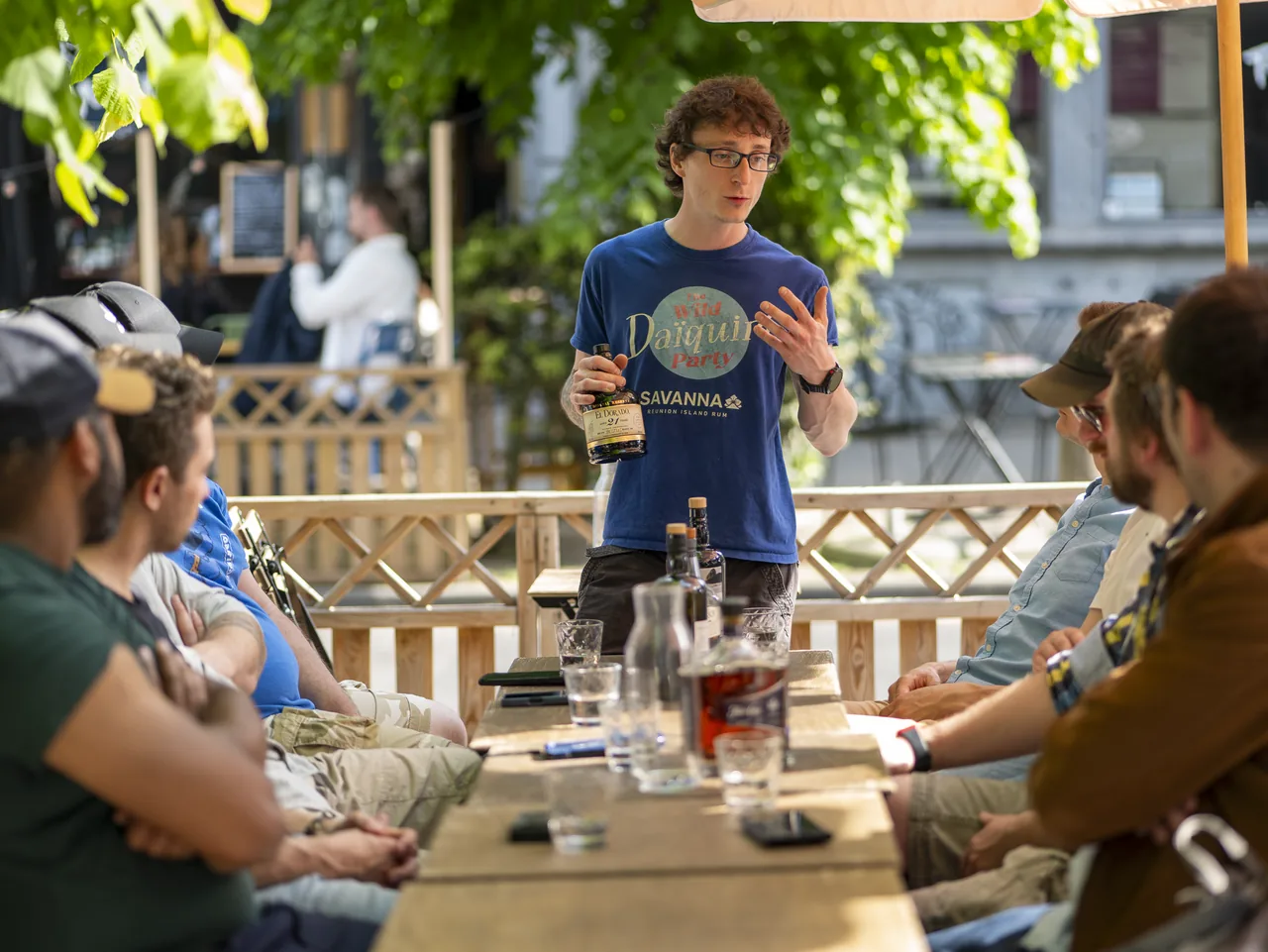
- At a tasting. The best way to travel the shelf in one sitting is a guided flight. We run rum tastings and masterclasses — with friends, as a gift, or for a private group — where we open bottles like the Réunion grand arômes above and walk you through what makes each one tick.
- At home. A slice of the backbar is available to take home from our shop: the ex-Caroni-cask Clairin Sajous, the Foursquare Magisterium, the Hampden Great House 2024 and more.
The Modern Alchemist is a cocktail bar and rum specialist in the heart of Saint-Gilles, Brussels — walk-ins welcome, reservations possible. Push the door, tell us what you’re curious about, and we’ll find the pour that’s right for you.
55 avenue Adolphe Demeur, 1060 Saint-Gilles · Mon–Thu 18:00–00:00, Fri–Sat 18:00–01:00, Sun closed.