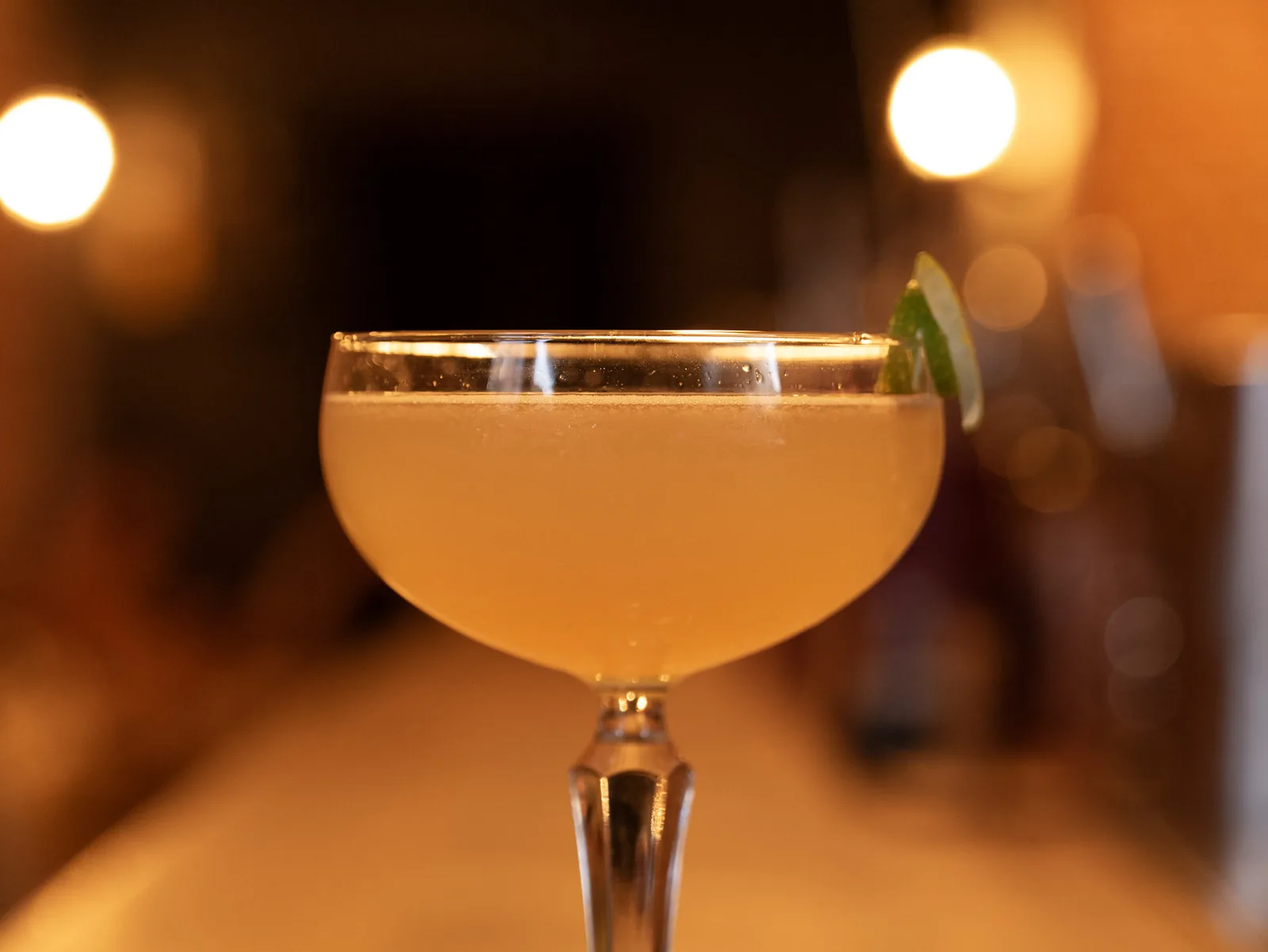
There is no better test of a rum bar than a Daiquiri. Rum, lime, sugar — that’s the whole drink. There’s no liqueur to paper over a flat spirit, no purée to hide behind, no ten-ingredient build to distract you. If the rum is good and the hands are steady, it sings. If either is off, you’ll know on the first sip. That’s exactly why it’s the staff favourite here, and why we treat it with more care than its three lines suggest.
Where the Daiquiri comes from
The story starts in Cuba, near a beach — and an iron mine — called Daiquirí, just east of Santiago. Around 1898, an American mining engineer named Jennings Cox is said to have run out of gin while entertaining guests, reached for the local rum, and stretched it with lime and sugar over ice. The name stuck to the place.
The drink grew up in Havana, at the bar that made it famous: El Floridita. There, head bartender Constantino “Constante” Ribalaigua turned a rough highball into a precise, chilled, beautifully balanced cocktail — and drew a regular who did more for its fame than any advertisement could: Ernest Hemingway. His preference for a drier, double-strength version lives on as the “Hemingway Daiquiri.” But the original is simpler, and harder to get right.
What makes a good Daiquiri
Three ingredients means every one is exposed. This is where a bar earns its Daiquiri:
- Lime, judged by the rum. Fresh-squeezed is the usual default — a crisp, light Daiquiri wants a lime that’s sharp and alive. But we’re not dogmatic about it, and here’s a less popular opinion we’ll happily defend: with an old, deep rum, a lime that has lost a little of its brightness can flatter it better than a screaming-fresh one. The lime should serve the rum, not the rulebook.
- Balance over sweetness. A Daiquiri is a sour: the lime leads, the sugar supports, the rum carries. Ours leans sharp and dry — closer to bracing than candied.
- Cold, and properly diluted. Shaken hard with good ice until it’s ice-cold, then double-strained into a chilled coupe. The shake isn’t for show — it aerates and dilutes to exactly the right point. Too little and it’s harsh; too much and it’s water.
- The rum is the whole point. This is the choice that changes everything. A light Cuban-style ron gives a crisp, classic Daiquiri; a pot-still Jamaican makes it funky and loud; an agricole turns it green and vivid. And we start a little stronger than most — a rum above 40% ABV: a punchier base takes the shake’s dilution better and keeps its character where a standard 40% can wash out. If you’re not sure which rum you like, our rum guide is the place to start — or just tell us at the bar.
Our build: 60 ml rum (above 40% ABV) · 30 ml fresh lime juice · 20 ml simple syrup (1:1). Shaken hard with good ice, double-strained into a chilled coupe. The skeleton stays put; the rum is the part that changes.
How we serve it
Our Daiquiri is a house classic — €14, in a chilled coupe — and it’s the drink we reach for ourselves at the end of a shift. It’s never quite the same twice: we re-tune the recipe batch to batch, following whatever we’ve just discovered on the shelf, our mood, even the weather — always with a little thread of high-ester funk running through it. When you order one, we’ll often ask a single question back: what kind of rum do you like? Crisp and clean, or funky and full? From there we build it to suit you.
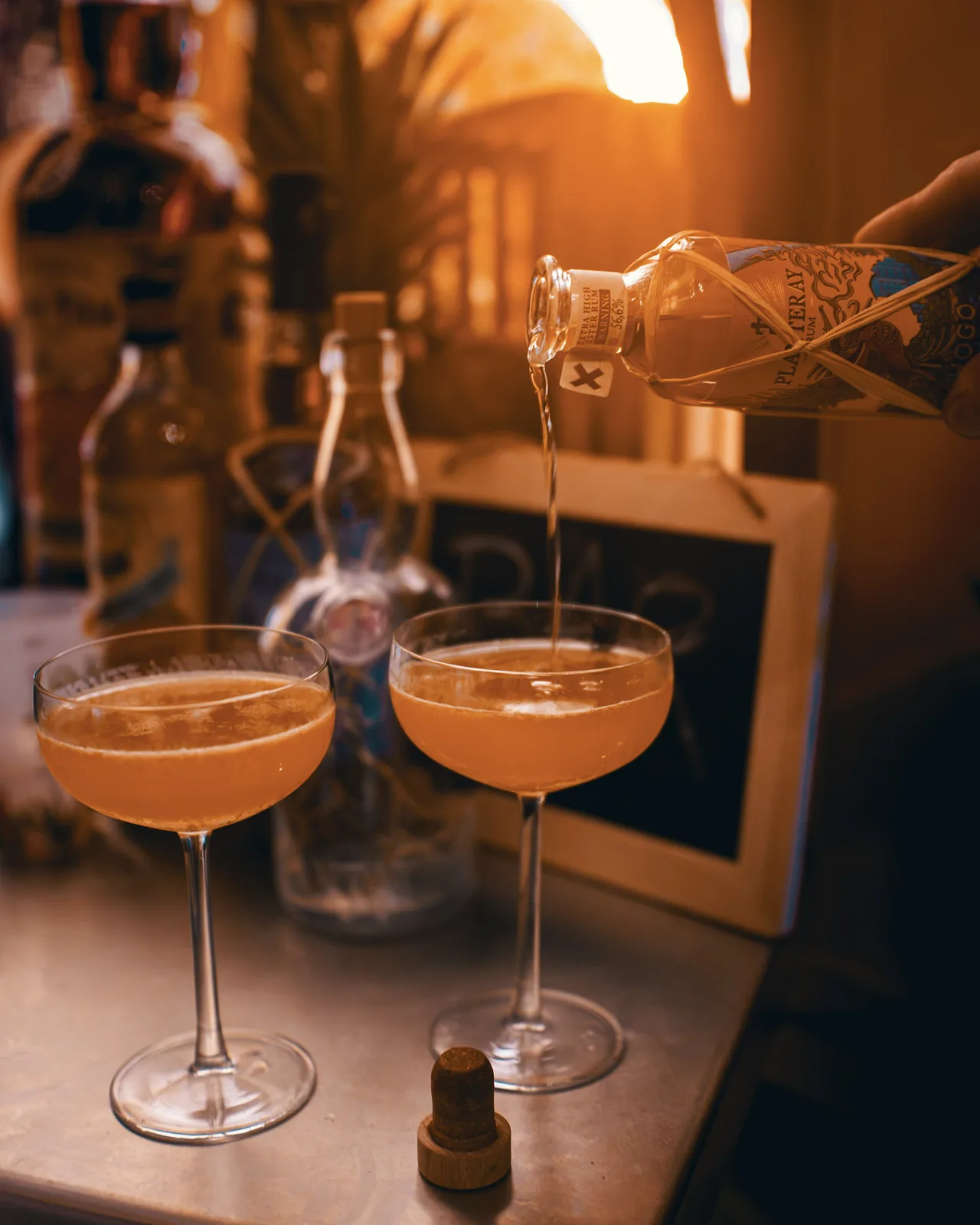
The Stiggin’s Daiquiri
Swap the base for a pineapple rum and the Daiquiri gains a whole new dimension — round, tropical, still bone-dry underneath. Our pineapple version is built on Planteray Stiggins’ Fancy, and takes its name from the same source the rum does: the Reverend Stiggins, the gluttonous, pineapple-rum-loving parson of Dickens’ Pickwick Papers. It’s fruit without sweetness, and it’s €14, same as the classic.

The Scandalequiri
It started as an inside joke. Back with our old team, we’d reach for a bottle we really shouldn’t have — something rare, the kind we’d normally pour neat and slow — and shake it into a Daiquiri, just for us. Someone would raise an eyebrow: “Isn’t this a bit scandalous?” “Meh.” And since we can never resist a terrible pun, the drink had its name: a Scandalequiri. For a while it stayed a private code between us; then the regulars caught on, and eventually it earned a spot on the menu.
The idea is simple and slightly heretical: take one of the rarest rums on our shelf — a single cask, an old tropical bottling — and build a three-ingredient sour around it. To a certain kind of purist, shaking a bottle that serious is almost a scandal. That’s the point. It’s the purest way to taste a great rum: nowhere to hide, nothing added, just lime and a whisper of sugar getting out of its way. Prices start at €18 and climb with the bottle, because the bottle is the whole story. It’s the drinkable version of everything on our backbar.
Taste it, or make it
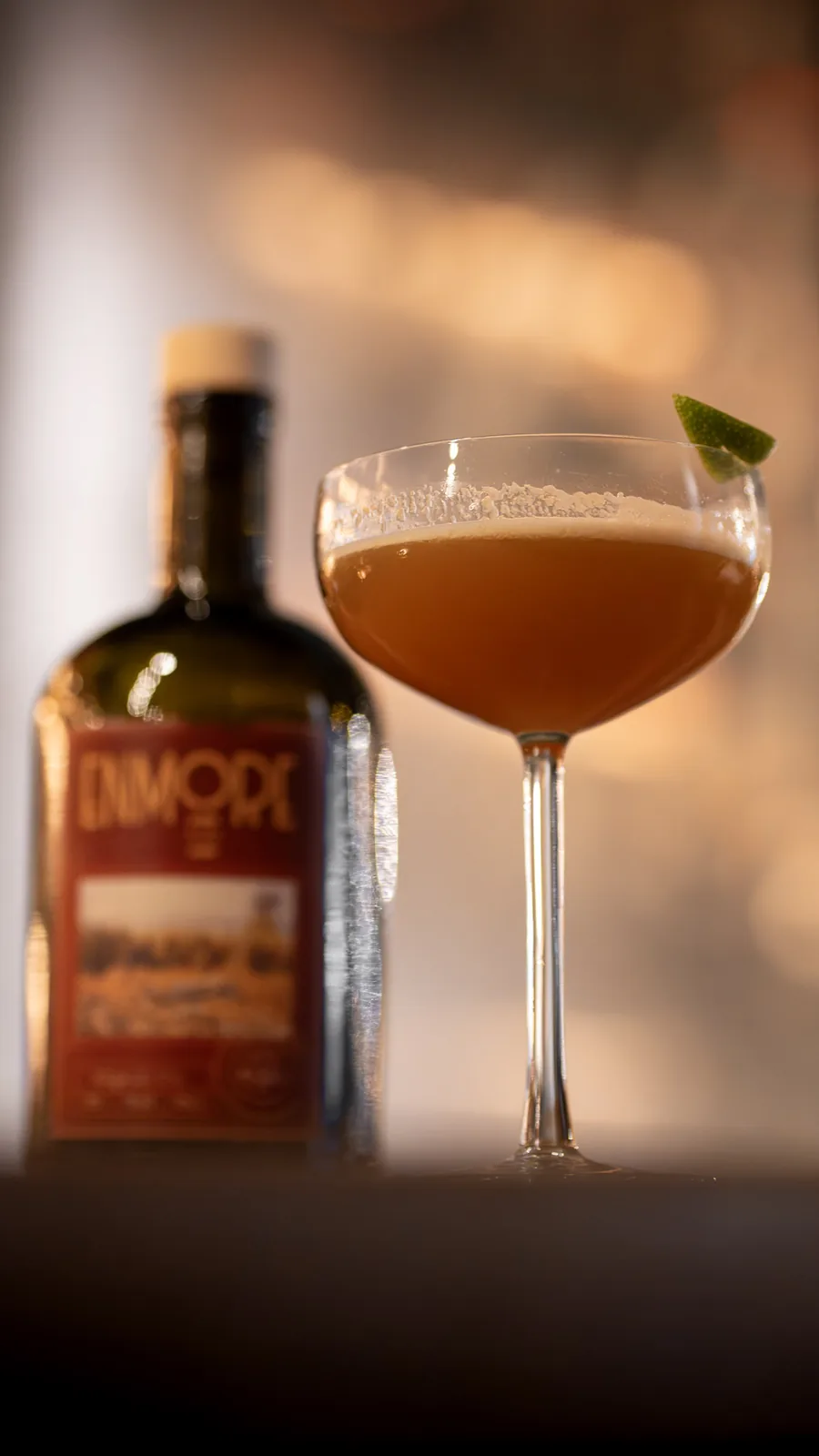
The best Daiquiri is the one poured for you, cold, right now. Push the door — walk-ins welcome, or book a table — and tell us what you’re in the mood for; the whole menu is built around showing off one style at a time.
Want to build them at home? Start with a rum that can carry a sour. A slice of our backbar is available to take home — pick something with backbone and you’re most of the way there.
The Modern Alchemist is a cocktail bar and rum specialist in the heart of Saint-Gilles, Brussels — walk-ins welcome, reservations possible.
55 avenue Adolphe Demeur, 1060 Saint-Gilles · Mon–Thu 18:00–00:00, Fri–Sat 18:00–01:00, Sun closed.